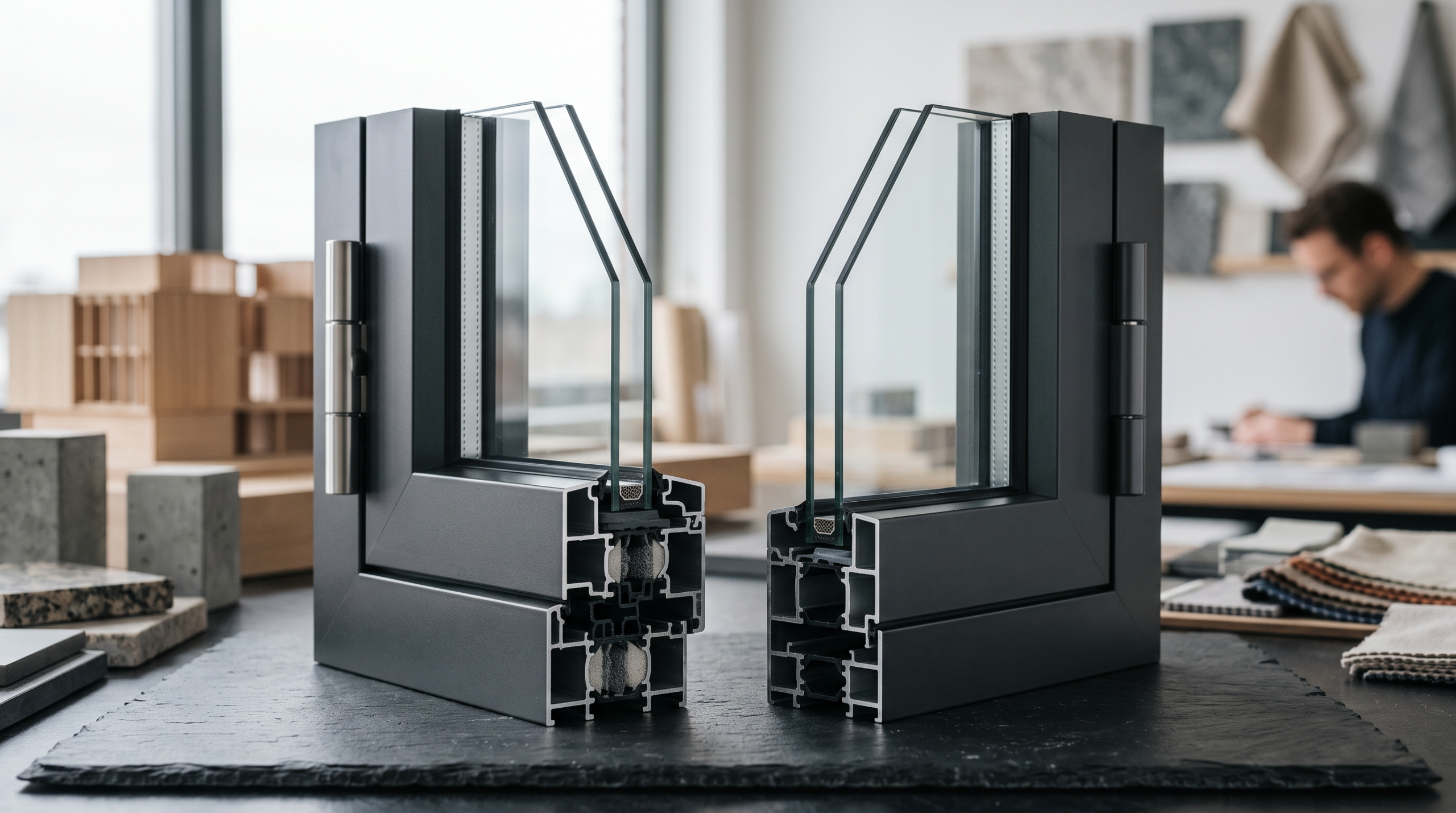
You receive two quotations for aluminum windows.
The windows look almost identical. They have the same color, similar glass, and approximately the same dimensions.
But one quotation is significantly more expensive than the other.
Why?
The answer is that most of the differences between a good aluminum window and a basic one are not immediately visible.
The amount and thickness of aluminum, profile design, glass quality, spacer width, rollers, fittings, rubber seals, brushes, screen system, and installation can all change the price considerably.
Before comparing prices, you need to make sure you’re actually comparing the same type of window.
Bigger Windows Need Stronger Profiles
One of the biggest factors affecting price is the aluminum profile itself.
A profile designed for a small window does not necessarily have the structural requirements needed for a large window.
Once windows become taller and wider, the weight of the glass increases significantly. Wind pressure and everyday opening and closing also place additional forces on the frame and sash.
For example, depending on the width, glass weight, profile design, and other engineering factors, windows around 1.5 to 1.8 meters high and above may require stronger or thicker aluminum profiles to help control movement and bending.
That additional aluminum costs money.
This is why two profiles may look similar from the outside while having very different weights, wall thicknesses, internal geometry, and structural strength.
Using less aluminum can make a window cheaper. But the real question is whether the profile is suitable for the size of the opening.
The larger the window becomes, the more important the strength of the profile becomes.
The Difference May Be Hidden Inside the Profile
Customers naturally compare what they can see.
But much of the cost of an aluminum window is hidden inside the sections.
Two profiles might have almost identical visible dimensions, while one contains significantly more aluminum or has thicker walls in critical structural areas.
This is especially important around the sections responsible for supporting the glass and carrying the moving sash.
The difference might only be a few millimeters or may not be visible at all once the window is assembled.
But over years of use, those differences can matter.
Wider Glass Spacers Aren’t Always Noticeable
The glass specification is another area where two windows can look almost identical.
Both quotations might simply say:
“Double glazed.”
That doesn’t mean you’re receiving the same glass unit.
The spacer between the two panes could be 12 mm, 14 mm, 16 mm, or 20 mm. A wider spacer can change the overall glass specification and cost, but it may be difficult to notice simply by looking at the finished window.
Glass thickness can also vary.
That’s why customers should ask for the actual glass configuration rather than simply asking whether a window is double glazed.

Look at the Quality of the Glass
Not all glass is equal.
The thickness, processing quality, clarity, type of glass, edge quality, and manufacturing of the double-glazed unit can all influence price.
Depending on the application, a project may also require different glass specifications for safety, size, noise reduction, or other considerations.
Large glass panels in particular need to be properly specified for their dimensions and application.
When comparing two quotations, ask:
What glass am I actually receiving?
The answer can explain part of the difference in price.
Look at What’s Carrying the Wheels
This is particularly important with sliding windows.
A sliding panel containing a large piece of glass can be surprisingly heavy.
The wheels or rollers underneath that panel are carrying that weight every time you open and close the window.
But you also need to look at the aluminum section carrying those wheels.
In some low-cost systems, the amount of aluminum around critical areas can be reduced to the absolute minimum.
From the outside, you may never notice.
But the structure underneath the sash is responsible for transferring the weight of the glass into the rollers and track.
This is another reason why simply comparing the visible appearance of two windows doesn’t tell you the full story.
Fittings Can Change the Price Considerably
Handles, locks, rollers, hinges, guides, stoppers, brushes, rubber seals, and other fittings may seem like small components.
Across an entire house, however, they can create a substantial difference in cost.
There can also be major differences in quality.
A premium roller designed to carry a heavy sliding panel is not equivalent to the cheapest available roller. The same applies to handles, locks, hinges, and other moving components.
Good fittings affect how the window slides, closes, locks, seals, and feels every time you use it.
These are parts of the window you may interact with thousands of times over its lifetime.
Don’t Forget the Screen
The insect screen is another area where manufacturers can reduce costs.
Look at how the screen is constructed and, importantly, how it closes against the window.
Does it close neatly and securely?
Are there unnecessary gaps?
How strong is the surrounding aluminum?
How smoothly does it move?
How does it meet the frame when closed?
A screen may seem like a minor accessory when you’re buying the windows, but it becomes something you use regularly once you’re living in the home.
Minimal Profiles Cost Differently
Another important question is:
What look are you trying to achieve?
If your main priority is the lowest possible price, there are basic aluminum systems designed to provide a straightforward and practical window.
If you’re looking for a more architectural appearance, you may prefer a minimal-profile system with slimmer visible aluminum and larger areas of glass.
Minimal systems require different engineering and profile designs to achieve their appearance while still carrying large glass panels.
So before comparing quotations, decide what you’re actually looking for.
What’s your budget?
Are you looking for a practical standard window or a minimal architectural profile?
There isn’t necessarily one correct answer. The right system depends on your project, design expectations, window dimensions, and budget.
Brushes and Rubber Seals Matter Too
The quality of the brushes and rubber seals can also vary significantly between systems.
These components help close the spaces between different sections of the window and reduce the passage of air, dust, water, and outside noise.
They aren’t expensive-looking components, and most customers won’t notice them when comparing windows in a showroom.
But they can have a major impact on how the window performs.
This is particularly important with sliding systems, where the panels need to move freely while still creating an effective seal when closed.
Installation Is Part of the Price
Finally, don’t forget what happens after the window leaves the factory.
A lower quotation may not include the same level of installation.
Proper installation requires accurate measurement, transportation, experienced installers, correct fixing, alignment, perimeter sealing, adjustment, and final inspection.
A quality window installed incorrectly can still perform poorly.
The frame needs to be level and square. The panels need to align correctly. Locks need to engage properly. Brushes and rubber seals need to make contact where intended.
Installation isn’t separate from the quality of the window. It’s part of it.
Compare Specifications, Not Just Prices
When comparing two aluminum window quotations, don’t only look at the final number.
Ask what you’re receiving for that number.
Compare:
- The aluminum profile and its structural strength
- The amount and thickness of aluminum
- Whether the profile is appropriate for the height and width of the window
- Glass thickness and quality
- Double-glazing spacer size
- Rollers and fittings
- The aluminum supporting the rollers
- Brushes and rubber seals
- Screen construction and closing system
- Standard versus minimal-profile design
- Installation and finishing
Only then can you make a fair price comparison.
At Hakeem Tahboub Aluminum Windows, we believe the first question shouldn’t always be “What’s the cheapest window?”
It should be:
“What’s the right window for my project and my budget?”
A small window doesn’t necessarily need the same profile as a two-meter-high opening. A customer looking for an economical solution doesn’t necessarily need the same system as someone designing a luxury villa with large minimal-profile windows.
The objective is to match the system to the opening, the design, and the customer’s budget.
The Bottom Line
Two aluminum windows can look almost identical from a few meters away and have completely different specifications underneath.
One may contain more aluminum. One may be designed for greater heights. One may use better glass, a wider spacer, stronger rollers, better fittings, more effective brushes and rubber seals, or a better-designed screen.
And one may simply be engineered for a completely different level of performance.
Don’t compare aluminum windows by appearance alone.
Look at the profile. Ask about the aluminum thickness. Check the glass. Understand the spacer. Try the handle. Slide the window. Close the screen. Look at the fittings. Ask who installs it.
And most importantly, make sure the window you’re paying for is actually designed for the size of the opening you’re putting it in.
Because with aluminum windows, what you can’t see can be exactly what you’re paying for.
Related posts
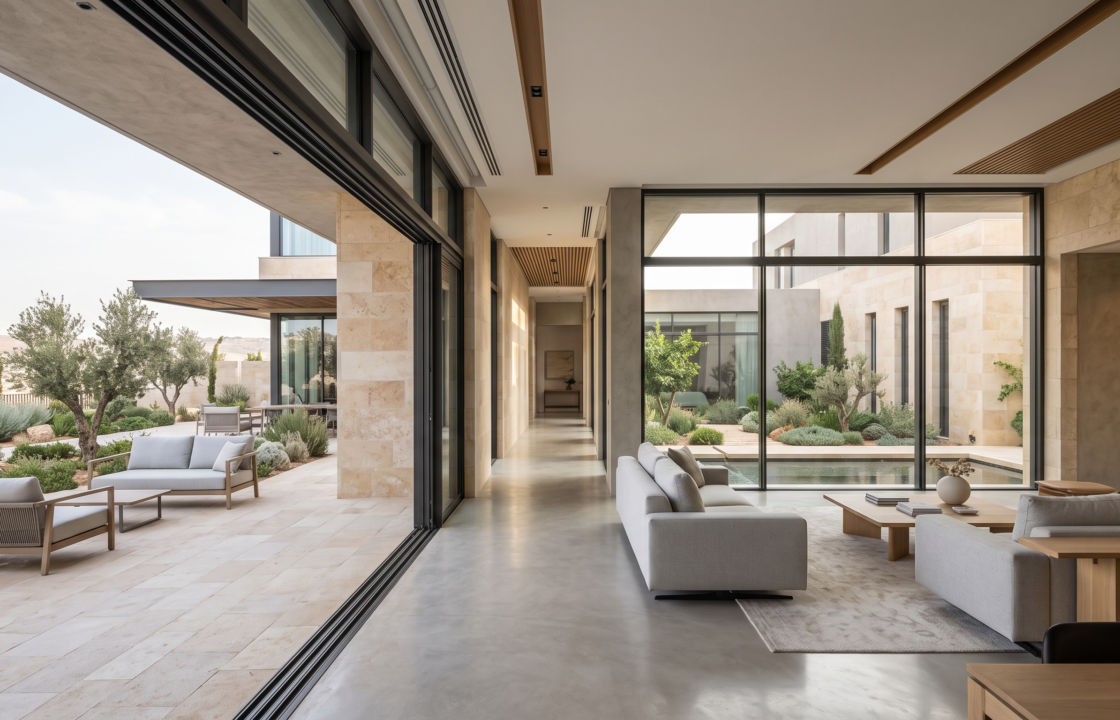
How to Choose the Right Windows for Your Home
Choosing the right windows for your home is an important decision that goes far beyond appearance. Windows affect natura …
Read more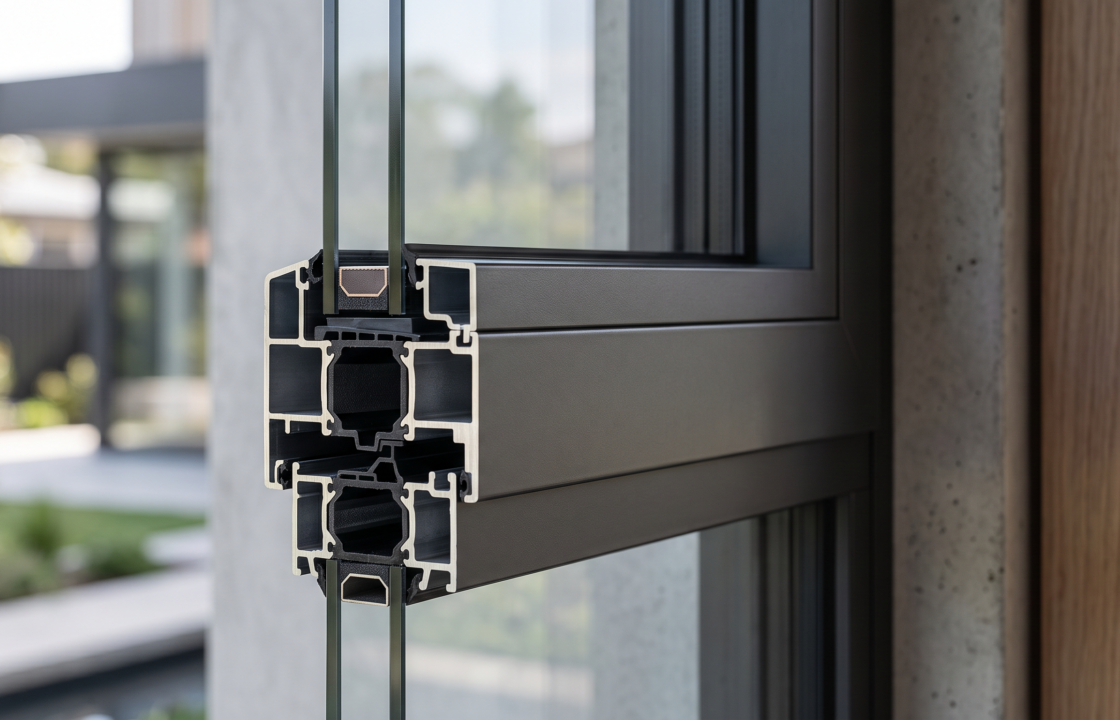
Why Window Insulation Matters More Than You Think
When choosing windows for your home, it is easy to focus on appearance, color, and price. But some of the most important …
Read more