
A clear point of contact and a written scope help you understand who is delivering each part of the finished opening.
Know the business behind the proposal
Choosing windows means choosing a product and the people who will deliver it. Identify the business issuing the quotation, the person coordinating your project and the appropriate contact details before the order moves forward.
A showroom, office or workshop can make a conversation more tangible, but premises alone do not guarantee a result. Equally, an independent tradesperson should not be dismissed simply because they work differently. Compare the specification, experience you can verify, documentation and clear responsibilities offered by the supplier.
Understand who measures and who makes
Ask how the order moves from a site visit into manufacturing. Who confirms the dimensions? Who checks the selected opening arrangement? Who coordinates the glazing, finish, hardware and screens?
Several businesses may contribute to an opening. Outsourcing or specialist supply is not automatically a problem. What matters for the customer is understanding the arrangement and the agreed responsibility for the finished work. You should not have to discover the supply chain for the first time when a question arises.
Follow responsibility through the project
Measure
Who confirms site dimensions and the opening arrangement before fabrication?
Explore this detailMake installation responsibilities explicit
Discuss site readiness, delivery access, protection of adjacent surfaces and the installation scope. Confirm who positions, fixes, aligns, seals and adjusts the frames, and who reviews the completed operation.
The quotation should help distinguish the window work from surrounding masonry, plaster, painting or other finishes where relevant. Clarifying those interfaces early is more useful than assuming every contractor has included the same tasks. Keep the agreed responsibilities with the project drawings and selections.
Use a sample to understand the proposal
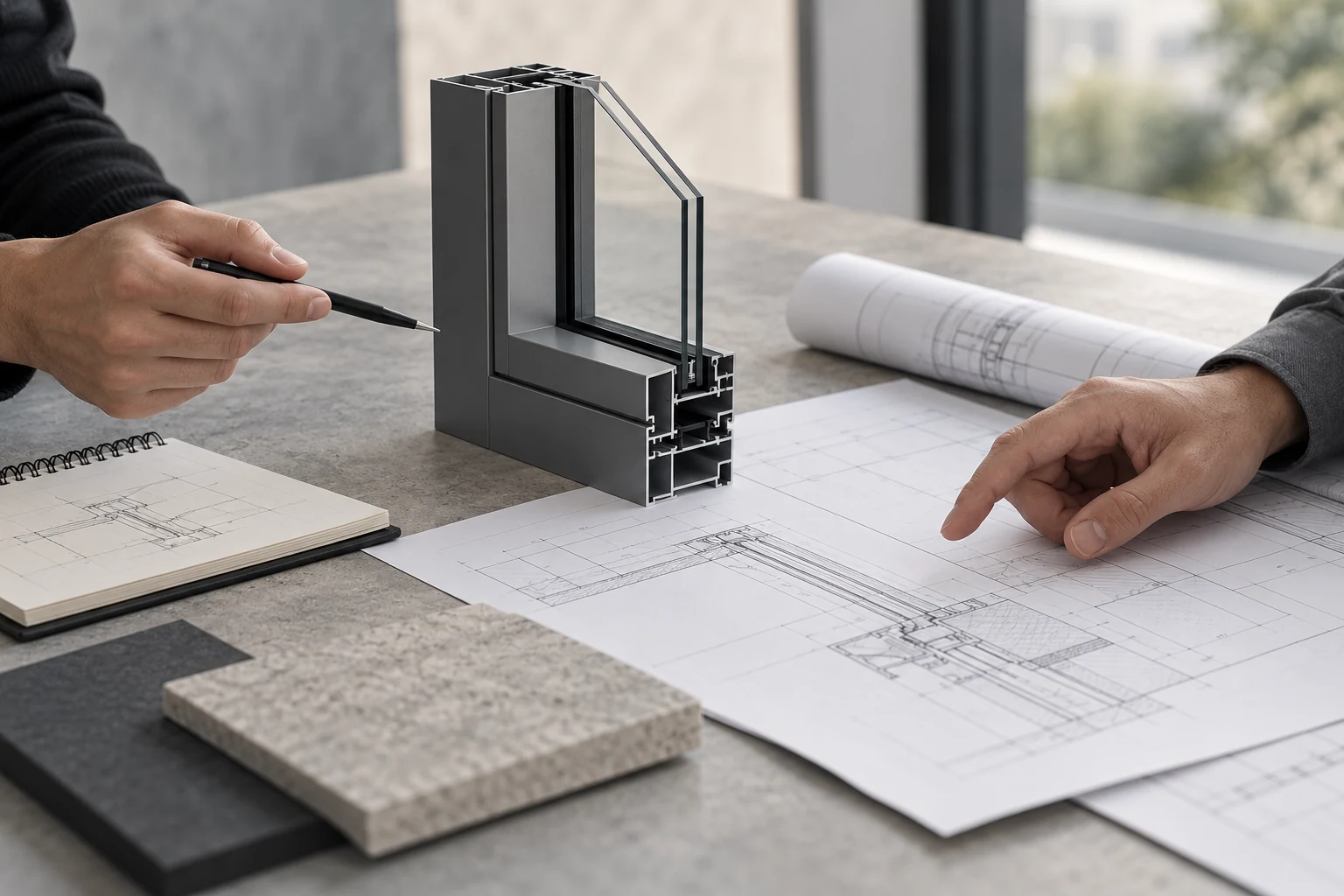
Photographs help explain an architectural idea. A representative sample lets you experience a physical system. Ask to try the opening, handle, lock and screen, and to see the proposed glazing and finish samples.
Confirm whether that sample represents the configuration in your quotation. It may demonstrate an opening concept while using a different glass unit or accessory. Record any differences. A useful visit ends with a clearer written specification, rather than relying on memory or a collection of photographs.
Ask what happens after handover
Windows contain moving parts and serviceable components. Ask how to report a question, identify an opening and arrange a review where appropriate. Confirm the applicable care information, warranty terms and support contact in the supplied project documents.
Do not infer warranty duration or coverage from an informal assurance. Understand what is actually offered, any responsibilities for maintenance and how components can be identified later. After-sales arrangements are part of a supplier comparison, alongside appearance, operation and price.
Keep one clear project record
Keep the quotation, selections, approved drawings where supplied, correspondence, payment records and handover documents together. Record changes to the scope and who confirmed them. Clear records support communication throughout the work, not only when there is a problem.
Before placing an order, ask the supplier to explain the route from measurement to support in straightforward terms. Our approach brings engineering, manufacturing, inspection and installation into a coordinated process. Discuss your project stage with the team so the next responsibilities are clear.
Questions to leave with.
- The business and project contact are identified.
- Measurement and manufacture responsibilities are clear.
- Installation scope and interfaces are agreed.
- Support and warranty documents are understood.