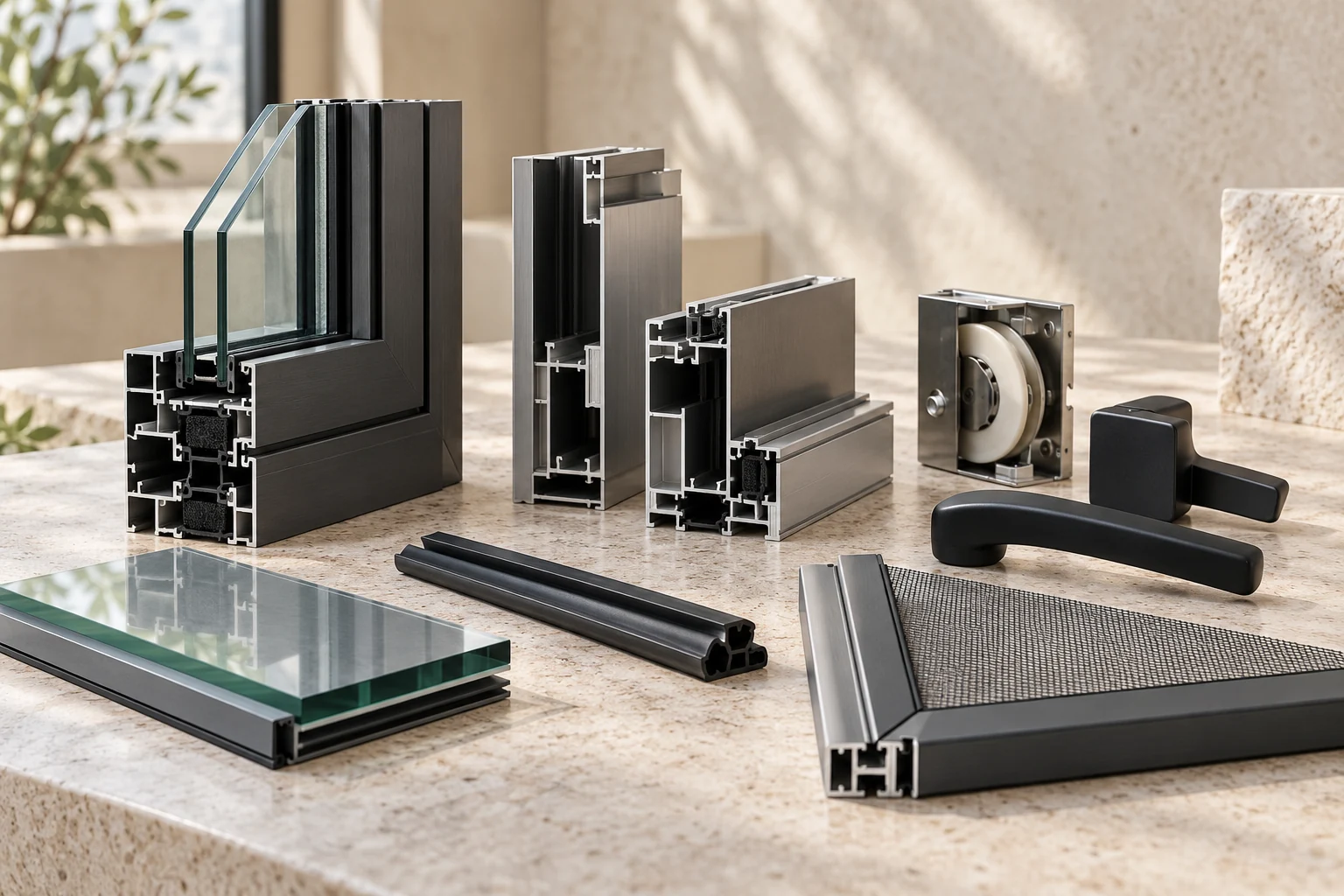
The frame material matters. The final decision also needs the actual system, glazing, dimensions and installation specification.
Begin with the opening you want to create
Material comparisons are most useful when they start with a project. Gather the opening dimensions, desired layout, architectural elevation and priorities for comfort and everyday use. The right question is which complete system can meet those requirements.
Both aluminum and uPVC can be used to make windows. Product construction, manufacturing and installation affect the finished result. Avoid deciding from a photograph or assuming that one material automatically provides the best answer for every room, climate or budget.
Compare the visible frame and panel arrangement
Aluminum is often considered where architectural expression and slender-looking framing are priorities. But the actual sightline and supported opening dimensions belong to a specific system, not to the word “aluminum”. Ask to see the proposed profile and arrangement.
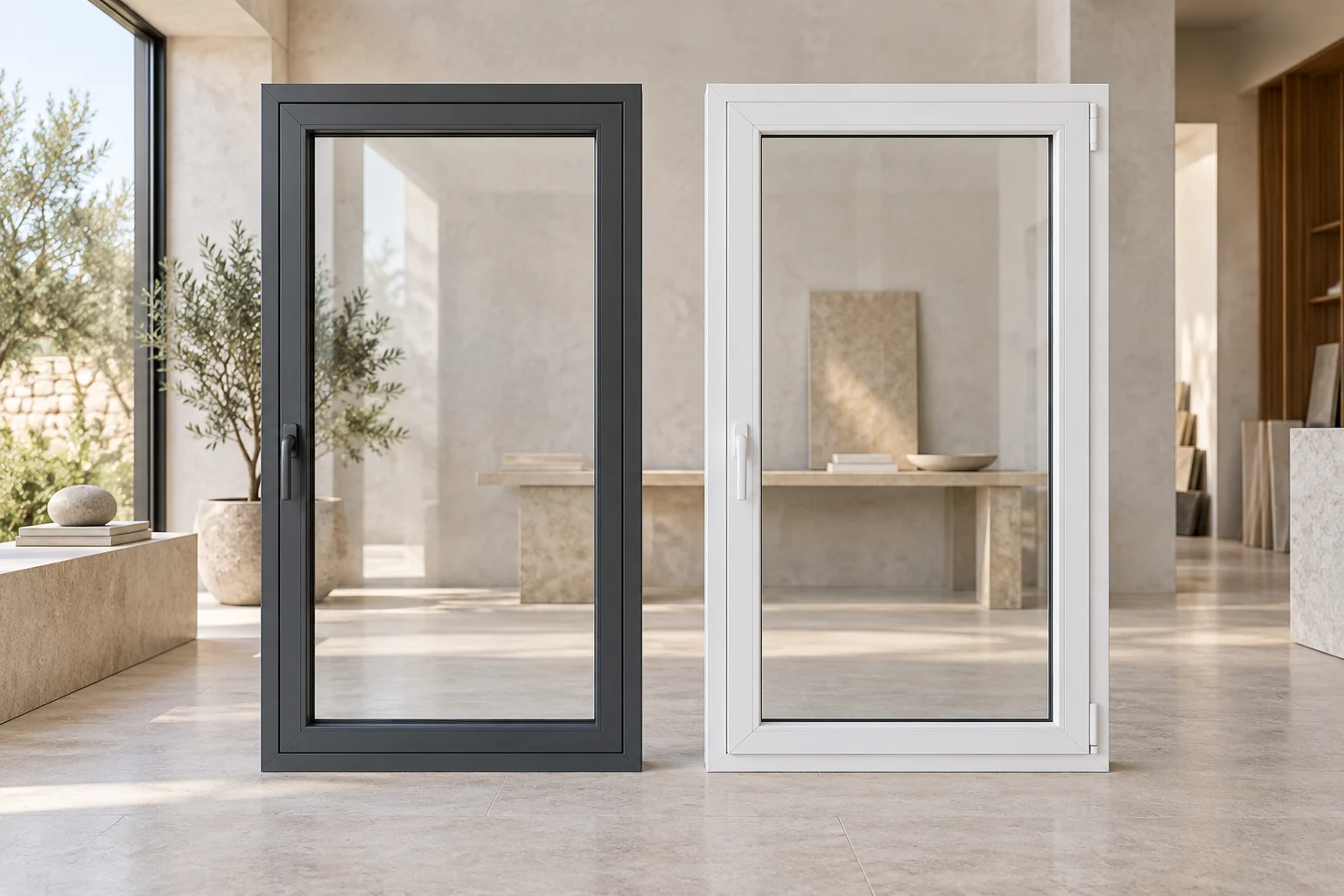
For a uPVC offer, review the frame sections, any reinforcement specified and the compatible dimensions. Compare both options on the same elevation, including the relationship between fixed and moving panels. A showroom sample should help explain the appearance; project-specific details should establish what will be supplied.
Choose the criterion you want to compare
Use the same project requirements to assess both complete systems.
Appearance
Compare the actual sightlines, panel layout and finish samples on the same architectural elevation.
Explore this detailTreat thermal comfort as a complete-system question
Metal and polymer frame materials have different thermal characteristics. That distinction matters, but it is only one part of a window. Glass, frame construction, sealing and the installation interface all contribute to the complete assembly.
Ask whether an aluminum proposal uses a thermal break rather than inferring it from a brand or model name. For either material, request relevant whole-window information when available. Orientation, exposure, shading and the building’s needs remain important in Jordan as elsewhere. A broad statement about the climate should not replace a specification.
Operate the sample and inspect the hardware
Try the handles, locks, rollers and hinges on representative samples. Look at how a sash meets the fixed frame and how any insect screen closes. Ask which components are included in the quotation and whether the sample matches that combination.
Pay attention to access for operation and care. A frame material cannot compensate for unsuitable hardware or poor alignment. The mechanism should be selected around the sash, glazing and intended use, with a clear route for adjustments and replacement parts.
Discuss finish, exposure and maintenance
Think about the appearance from both sides of the opening and its relationship with stone, render, interiors and nearby metalwork. Compare physical colour and texture samples. Screen images are useful for exploring an idea, but they do not replace an agreed finish sample.
Ask for care instructions appropriate to the supplied frame, coating, glass and hardware. Cleaning access, surrounding dust and exposure can affect how the opening is looked after. Avoid universal “maintenance-free” promises: even a durable frame is part of an assembly with moving components and seals.
Compare the complete offers on equal terms
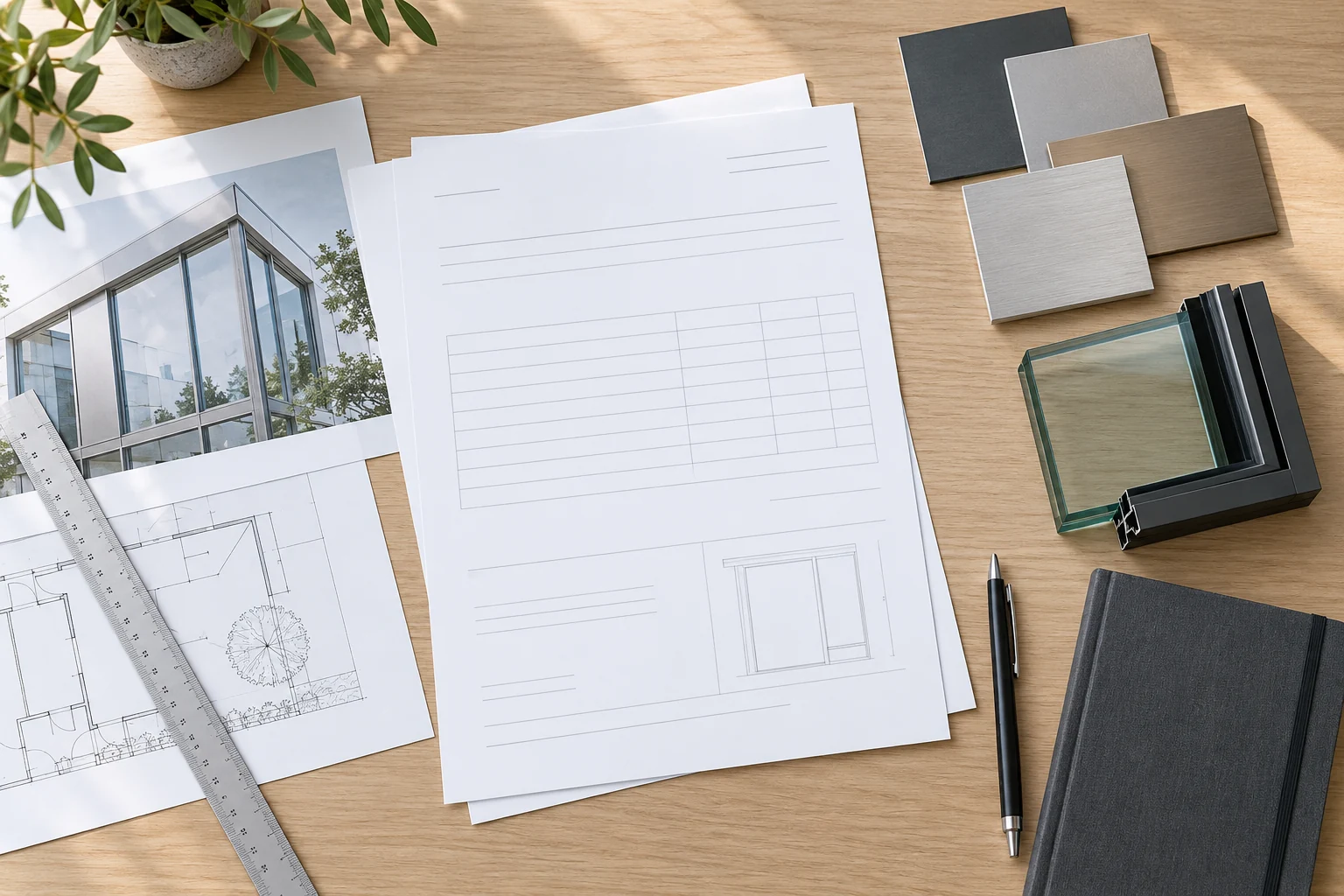
Write down the proposed system, profile, opening configuration, glazing, finish, hardware, screens and installation scope for each offer. Check which measurements are preliminary and how final dimensions will be confirmed.
Then compare responsibilities, programme and the supplied service and warranty terms. A lower or higher price is difficult to interpret if the two offers describe different products or different amounts of work. Choose the combination that responds clearly to the requirements you set at the beginning.
Questions to leave with.
- Both proposals describe the same opening.
- Actual profile and glazing details are available.
- Operation and finish samples have been compared.
- Installation, care and service terms are understood.
Further reading
General educational guidance: US Department of Energy — window types and technologies. General references do not establish ratings or availability for a particular company product.